Thursday, June 20, 2019


#dataintegrity is one of the biggest pain in #pharmaceuticalcompanies now a day and the issues are increasing year on year globally. Time to peep #within #rootcauseanalysis why is so.

Trends are eye opening and reveals, cases are growing around the globe more in last two Calendar years.

Link:
An-analysis-of-fda-warning-letters-citing-data-integrity-failures

Wednesday, June 19, 2019

Use These 7 Tools For Breakthrough Quality And Performance In 30 Days

To get best results in Quality people are using various type of tools. Here in this


article 7 Tools for quality performance are very well elaborated. Using such tools will definitely enhance quality system and make robust quality culture.


Link:

https://www.pharmaceuticalonline.com/doc/use-these-tools-for-breakthrough-quality-and-performance-in-days-0001?

Tuesday, April 30, 2019

Regulatory Expectations For Objectionable Microorganisms In Nonsterile Pharmaceuticals

Regulatory Expectations For Objectionable Microorganisms In Nonsterile Pharmaceuticals


We all know microorganisms are present in environment everywhere, in almost all type of conditions. Also this is known all microorganisms are not harmful only 2% of population is harmful and cause infections. 98% population of microorganisms are useful in running biodiversity on the earth.  Those are harmful comes under category of pathogens.
Microbiology House
Likewise aseptic or sterile activity regulatory bodies are concerned about contamination of microorganism in formulation other than parenterals.

Crystal M. Booth has provided a good information in following article for non sterile microbiological contamination in formulation.


Saturday, April 27, 2019

How To Establish An Aseptic Gowning Qualification Program

How To Establish An Aseptic Gowning Qualification Program


gown, cleanroom, dress
For aseptic area control on contamination is most important and critical job. Gowning is not given to protect your body only, it is for protection of product from viable and non-viable contamination. Many studies has proven that HUMAN is the major source of contamination in clean area and therefore now close system are first choice of aseptic product manufacturing (RABS/ Isolator / SUS).


What are the best way of gowning and how to qualify them is given in details here in this article of  Crystal M. Booth, PSC Biotech.


https://www.pharmaceuticalonline.com/doc/how-to-establish-an-aseptic-gowning-qualification-program-0001

Saturday, April 6, 2019

A review of - Advanced Microbiology Techniques for Aseptic Facilities


A review of - Advanced Microbiology Techniques for Aseptic Facilities


Here is link of video for everyone's update to know where Pharmaceutical industry is moving for - The Clean Facility of the Future - Advanced Microbiology Techniques for Cleaner Facilities and Purer Products.


Aseptic, Clean area, Operation, Microbiology, Techniques
This one of the good video having many industrial experts comments on the subject and will enhance knowledge to all who are in field of aseptic and clean area facility design, operation or quality checks.


Link:

A review of - Advance Microbiology Tech for Aseptic Facilities

Monday, March 18, 2019

AN ANALYSIS OF FDA FY2018 DRUG GMP WARNING LETTERS


House, FDA, Analysis, Warning, letter

This article presents a detailed summary of the drug GMP warning letters issued in FY2018, as well as a comparison of trends since fiscal year 2013. A comprehensive GMP intelligence program includes evaluation of health authority enforcement actions, including FDA Forms 483, warning letters, seizures, recalls, and consent decree agreements. This allows manufacturers and sponsors to identify new trends in the focus of FDA inspectors and to act to address or justify similar situations at their own firms. Section 4.2 of ICH Q10, Pharmaceutical Quality System, specifies the “Monitoring of Internal and External Factors Impacting the Pharmaceutical Quality System,” including “Emerging regulations, guidance, and quality issues…”. Enforcement actions should be monitored as a component of quality issues mentioned in the Q10 guidance. Although the FDA is more transparent regarding enforcement actions than other health authorities, readers are encouraged to follow information published by Health Canada (Drug & Health Product Inspections and Inspection Tracker), Eudra GMDP reports of noncompliance, and WHO Notices of Concern.
Published By: Dr. Tarun Chugh

Saturday, March 9, 2019

"What, You Call That A RABS?" 7 (Real-Life) Aseptic Filling Blunders To Avoid

"What, You Call That A RABS?" 7 (Real-Life) Aseptic Filling Blunders To Avoid

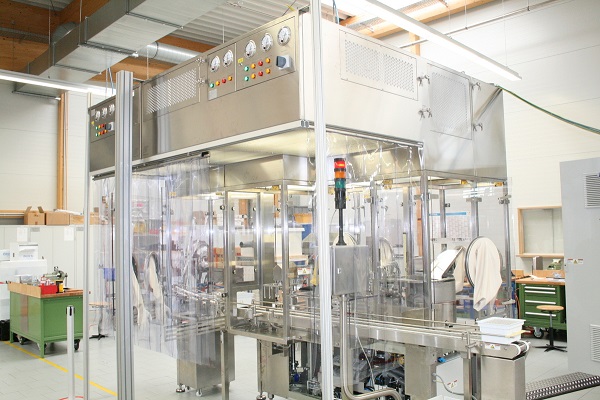
Restricted-access barrier systems (RABS) have been a major part of pharmaceutical aseptic filling operations for many years. They were introduced around the year 2000, and by 2007 there were 75 installations in the business globally.1 Today, there may be several hundreds, most of which are in GMP-compliant facilities and serving the needs of the business. RABS were born out of the need to: 1) protect the operators from the products they were filling, 2) improve filling compliance, 3) provide better access to a wider variety of filling process equipment, and 4) bring legacy lines into better compliance. This last point is critical for CMOs because their batch sizes vary widely, necessitating frequent and rapid changeovers, as well as addressing the variations in vial sizes and filling setup parameters.
There are many excellent and scholarly articles written about RABS and RABS vs. isolators; however, this is not a technical article. This article is based upon our travels over the last 10 years, looking at aseptic filling operations and seeing what was described to be “a RABS” by the various owners. These RABS are all dubious devices created by their owners, who are deluding themselves into believing they have a validated aseptic RABS. Some of these are actually amusing, and they illustrate what happens when “hands-on” engineering meets the needs of operations while the compliance department is asleep at the wheel.
Aseptic; RABS; Microbiology;

Published By: Dr. Tarun Chugh

Power Failure in Aseptic Area

Power Failure in aseptic activity is most dangerous due to HIGH RISK  to the product being prepare on line for patient safety. A h...